
Free parcel locker delivery: Baltics from 49 € • Finland from 79 € • For regular-price products only.
Sexual health
Menstrual cups: choice, hygiene and warning signs
Start with comfort
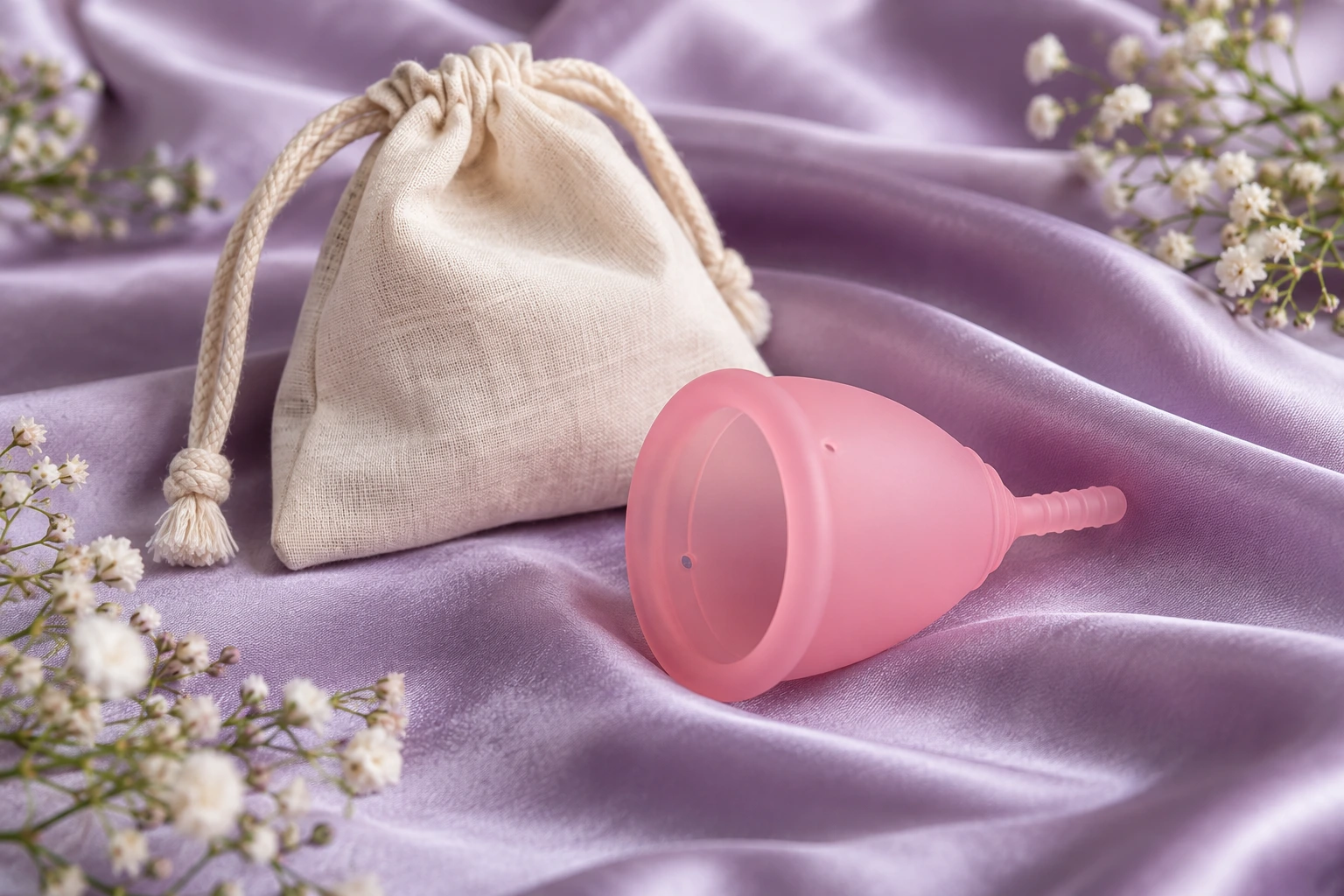
A cup collects menstrual blood rather than absorbing it like a tampon. Sizes and firmness vary. Choose clear instructions and material information; another person's experience cannot guarantee your comfort. Pain is not a compulsory adjustment stage.
Respect wearing limits
Wash hands before and after handling. The product instructions set emptying, cleaning and maximum continuous wear time. Do not extend it simply because there is no leak. Drying and storage are part of care too.
Remove gently
Follow instructions to release the seal; do not pull forcefully on the stem alone. Seek clinical help if removal fails or is painful. Ask your clinician about suitability and precautions if you have an intrauterine contraceptive.
When help is urgent
Toxic shock syndrome is rare but serious. Sudden fever, rash, vomiting or severe illness requires urgent medical advice; remove the cup if possible. Call 112 for breathing trouble, confusion or collapse. A cup is not contraception.
Match the model to your actual day
Size and capacity are not the only considerations: you need access to handwashing, emptying and cleaning as instructed. Plan suitable facilities for travel or work. Do not select the largest capacity merely for a promise of less frequent care. Individual comfort and wearing-time limits matter more than universal marketing. With an intrauterine contraceptive, recent procedure or health questions, discuss use with a medical professional instead of relying on somebody else’s review.
Use care instructions for the particular product
Keep the manual and check permitted products, temperatures and between-cycle treatment. One brand’s method may not suit another. Any boiling does not automatically guarantee sterility, and improvised household chemicals are unsuitable. Store only when fully dry in the recommended way. Inspect damage and changes. Do not continue with a painful cup or remove it forcibly. If you cannot remove it yourself, obtain medical help rather than using additional tools. Care should remain manageable within your ordinary routine.
Recognise when waiting is inappropriate
Sudden severe illness, fever, rash, vomiting or dizziness during use needs urgent medical assessment. Remove the cup if you can do so safely and tell the healthcare professional you were using it. Changing models alone cannot resolve that event. Symptoms do not let you diagnose yourself from an article, but waiting for a convenient shopping opportunity is inappropriate too. A cup is one menstrual-care option rather than a compulsory choice. If uncomfortable, discuss a suitable alternative.